Auto review: Priced at nearly $90k, the 2026 Lincoln Aviator Black Label is very Continental
Published in Business News
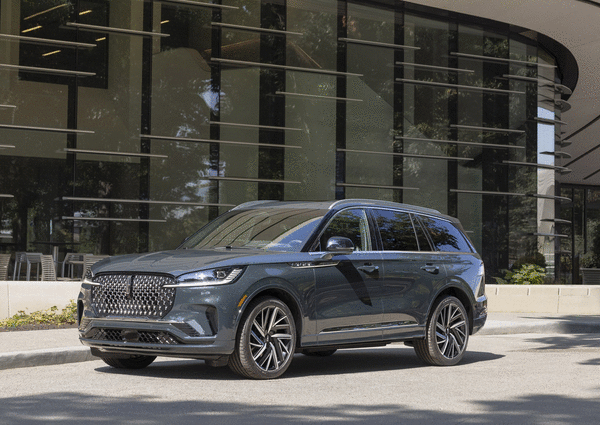
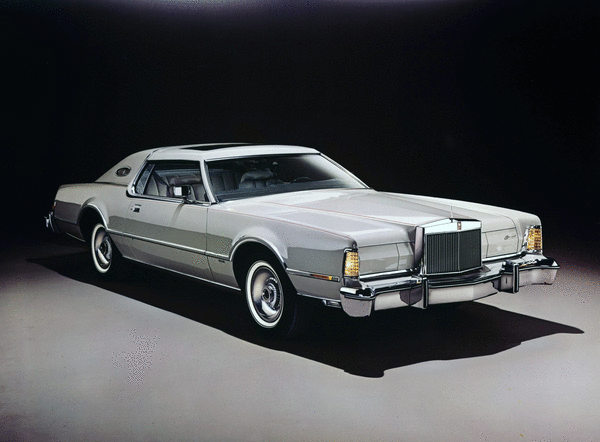
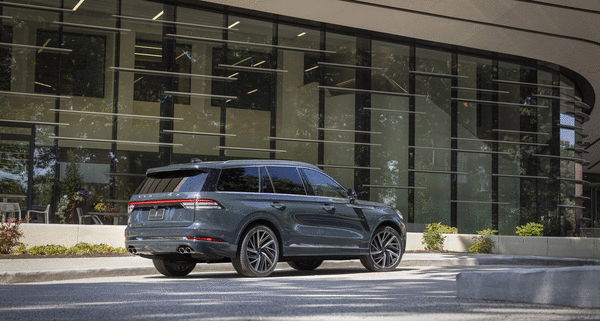

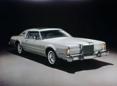



In 1976, a top-of-the-line Lincoln Continental Mark IV Cartier was priced at $15,000, or $88,000 translated to 2026 dollars. Elvis consumed them like popcorn, but for the rest of America, it was one the country’s most expensive automobiles. A half-century later, we have the 2026 Lincoln Aviator Black Label, a three-row Explorer-based crossover with luxuries that make the old Continental seem like a Ford Granada. And if you don’t know what that means, keep reading because this Lincoln is loaded.
The Mark IV was defined by its runway hood, tight cabin and brief Continental trunk. It defined the term “land yacht” as it bobbed and weaved over roads. Our Aviator has completely different proportions, trading longer, lower and wider for shorter, higher and narrower in adaption to modern life.
The Mark IV and most ‘70s Lincolns aside, the automaker was historically known for the understated elegance preferred by Edsel Ford against Cadillac’s flashy exuberance conjured by Harley Earl. That’s also true of the Aviator. It has glitz in its grille, LED lighting, and lower body accents, but there’s a gracefulness to how the roofline recedes rearward as accented by chrome window strips. Large 22-inch wheels fill the sculpted body forms while taillamps wrap across the hatch. It’s sleek, but with curbside presence. Even the Continental grille star is lit.
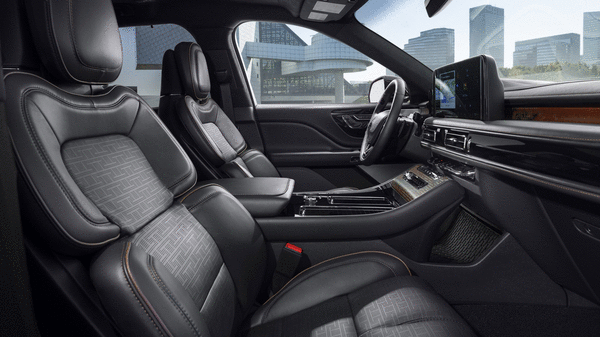
As big as the Mark IV was, it could barely squeeze six people in two sofas; it was far better suited to carrying four spoiled humans in opulence. The Aviator easily carries six, seven if three tiny tots are stationed out back. The third row powers down for impressive amounts of luggage space behind the motion-sensitive power hatch, but real drama occurs forward.
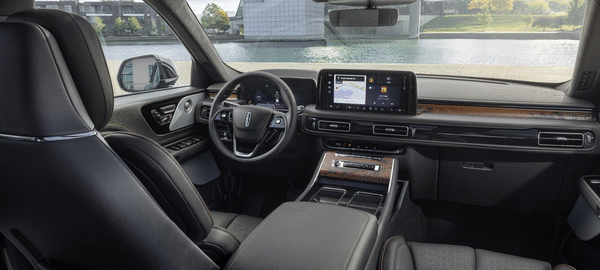
There’s no pillar-to-pillar screen like the Navigator or Nautilus, but it doesn’t need one given the crisp flatscreen instruments and intuitive center touchscreen. A wide head-up display puts speed, navigation, and safety system status high and light. Gears are selected via buttons while wireless phone connections and charging add convenience. Crank up the 28-speaker Revel audio system for aural nirvana. Rear passengers even have their own touchscreen for audio and climate controls.
And there’s still some old school cool with soft Scottish Bridge of Weir leather as in the 1956 Continental Mark II. Elvis would recognize its buttery aroma. Etched wood veneers the dash, doors and console while four-zone automatic climate control creates personal spheres of comfort. Front and middle rows are heated and ventilated. Front seats that look like Eames loungers are 30-way adjustable with their own massagers. It’s all so ridiculous but oh so glorious.
Under the Aviator’s curvaceous hood is a 3.0-liter twin-turbo V-6 engine, whomping out 400 horsepower and 415 pound-feet of torque, routed to the all-wheel-drive system through a 10-speed transmission. The old Mark IV’s 7.5-liter V-8 produced half that power and less torque too. Fully stomped, the big crossover surges from 0-60 mph in a brief 5.5 seconds. Given that, fuel economy rated 17/25 mpg city/highway seems frugal compared to the old ship’s 10 mpg. All nice, but I’d still love to see the Aviator with a supercharged V-8!
While the old Continental needed a captain and a skipper to pilot her to the curb, the Aviator is a sport wagon by comparison. By driving it, you’d never guess the underlying architecture is shared with the Ford Explorer. Its adaptive suspension system just rumbles over rough roads. Click the drive mode into “Excite” to stiffen the suspension, tighten the steering, and sharpen the throttle. It’s never harsh, but it makes weekend backroads a little more fun. It feels even more expensive than its price would suggest. It can also park itself.
If you don’t want to drive, you don’t really have to. Safety is bolstered by automatic emergency braking, lane keep assist, blind spot warning and rear cross path detection, but our Aviator also came with Ford’s Blue Cruise system for hands-off touring on approved roads. Sensors insure you’re paying attention, so no reading books or snoozing, but drivers can sit back and drink a cup of coffee while the world slips by.
And the Aviator's pricing tracks with the Continental back in America’s Bicentennial year. The Aviator starts at $56,910, rising to $89,955 for the Black Label edition we tested. That’s not even the most expensive Lincoln today, as Navigators easily top $100k, but you’d have to compare that to a custom limousine from the Elvis era. If you dare to compare, check the Audi Q7, Cadillac XT6, Genesis GV80, Lexus TX, Mercedes-Benz GLE and Volvo XC90.
Likes: elegant style, heavenly seats, refined driving
Dislikes: tight third-row, no V-8, expensive
2026 Lincoln Aviator Black Label
Seven-passenger, AWD Crossover
Powertrain: 3.0-liter TTV6, 10-spd
Output: 400hp/415 pound-feet torque
Suspension f/r: Elect Ind/Ind
Wheels f/r: 22-inch/22-inch alloy
Brakes f/r: disc/disc
Towing: 5,000 pounds
0-60 mph: 5.5s
Fuel economy: 17/25 mpg city/hwy
Assembly: Chicago
Base/As-tested price: $56,910/$89,955
©2026 Tribune Content Agency, LLC










Comments