US Southwest heat wave tumbles records, raises fire risk
Published in News & Features
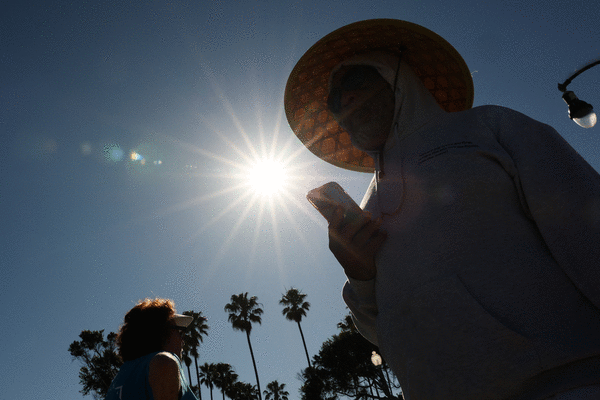
Nearly 9.5 million people across the U.S. Southwest face extreme high temperatures, as an ongoing heat wave continues to topple records and raise the risk of wildfires as far away as the Great Plains.
Las Vegas reached 96F Saturday, a record for the date, while the nearby local National Weather Service office hit 97F for the second day in a row, an all-time high for March. Phoenix Sky Harbor International Airport hit 105F for its third day in a row, which also is the highest March temperature recorded there.
The heat isn’t stopping. Both Las Vegas and Phoenix will likely break or tie records for the rest of the week and may extend beyond then, said Ashton Robinson Cook, a forecaster with the U.S. Weather Prediction Center. Downtown Los Angeles may also set new daily records in the coming week.
“The pattern is still going to persist for the foreseeable future with record heat persisting all the way through the end of March,” Robinson Cook said. “Las Vegas should break or tie records for the next seven days if the forecast holds and Phoenix all the way through the 28th.”
Across the U.S., 383 daily high temperature records will either be broken, tied, or threatened in the next seven days, the Weather Prediction Center said. A massive dome of high pressure has driven up temperatures across the Southwest and threatens to push heat and dry air into the Great Plains, raising the fire threat there. Red-flag fire warnings were posted across much of Texas, Oklahoma and Kansas Sunday.
“With patterns like these you don’t want to sleep on the fire weather threat,” Robinson Cook said.
The heat comes on the heels of a record warm winter across nine western states including Texas, Nevada and Arizona, according to the National Centers for Environmental Information. California, Nebraska and Kansas had their second warmest winters in the last 131 years, which was also true for the U.S. as a whole.
The warmth across the West threatens much-needed snowpack in the mountains, which can affect water supplies for people and agriculture later in the year, said Jennifer Francis, a senior scientist at the Woodwell Climate Research Center.
Overall global heating is partly to blame, but the stuck jet stream pattern that has pinned the high to the Southwest is likely related to expanding ocean heat waves in the North Pacific, which “is also tied to climate change,” Francis said.
“Brutal heat waves are not just a summertime concern anymore,” Francis said by email. “These unprecedented events may be the new abnormal we should expect to see more often as heat-trapping greenhouse gases continue to build up in the atmosphere.”
The long-range forecast doesn’t show any relief coming soon.
The odds are high much of the U.S., except for the Northeast, will have higher than normal temperatures through April 4, the U.S. Climate Prediction Center said. The agency’s three-to-four-week outlook calls for warmth to continue through April 17 in most of the 48 contiguous states.
_____
©2026 Bloomberg L.P. Visit bloomberg.com. Distributed by Tribune Content Agency, LLC.






Comments