
The Greener View: Organic Gardening
Organic Gardening
Q: I want to do more organic gardening this summer, but I am not sure how to tell if something is organic or not. I want to make my garden soil better by adding more organic matter. How much should I add?
A: There is a lot of confusion about what is organic and how to garden organically. What we need to understand is the difference between organic matter and organic material. Organic materials are made from plants or animals. Raw pieces of plants, such as tree bark, leaves, coconut hulls and straw, are organic materials. Composted pieces of plants, such as peatmoss and composted leaves from your trees, are organic materials. Manure, bone meal, blood meal and feathers are organic materials from animals.
Organic matter is actually a measurement term. Soil scientists measure the amount of organic material in soil by using a burning process. They take an amount of soil with a known weight after being dried in an oven, heat it to about 1,000 degrees for a couple of hours, then reweigh the sample. The difference in weight is reported as a percentage. A typical topsoil sample will have a 3% to 5% difference in weight, so it is 3% to 5% organic matter by weight.
Let's change things to volume for a minute. Take 1 part compost and add 1 part sand and 1 part topsoil. By volume, the mix is one-third organic material. But by oven dried weight and burning off any organic material, the mix will probably still end up being about 5% organic matter. Because of the weight difference between fluffy organic materials and sand or soil, most garden soil has only 5% organic matter, even if it is one-third organic material by volume.
It is beneficial to add organic materials to just about any soil, depending on the types of plants you want to grow. It will loosen up clay soils for better air movement and drainage, and it will hold water when added to sandy soils. If you want to grow desert cacti in sandy soil, adding organic materials may not be beneficial, but it would be good for planting vegetable crops in sandy soil.
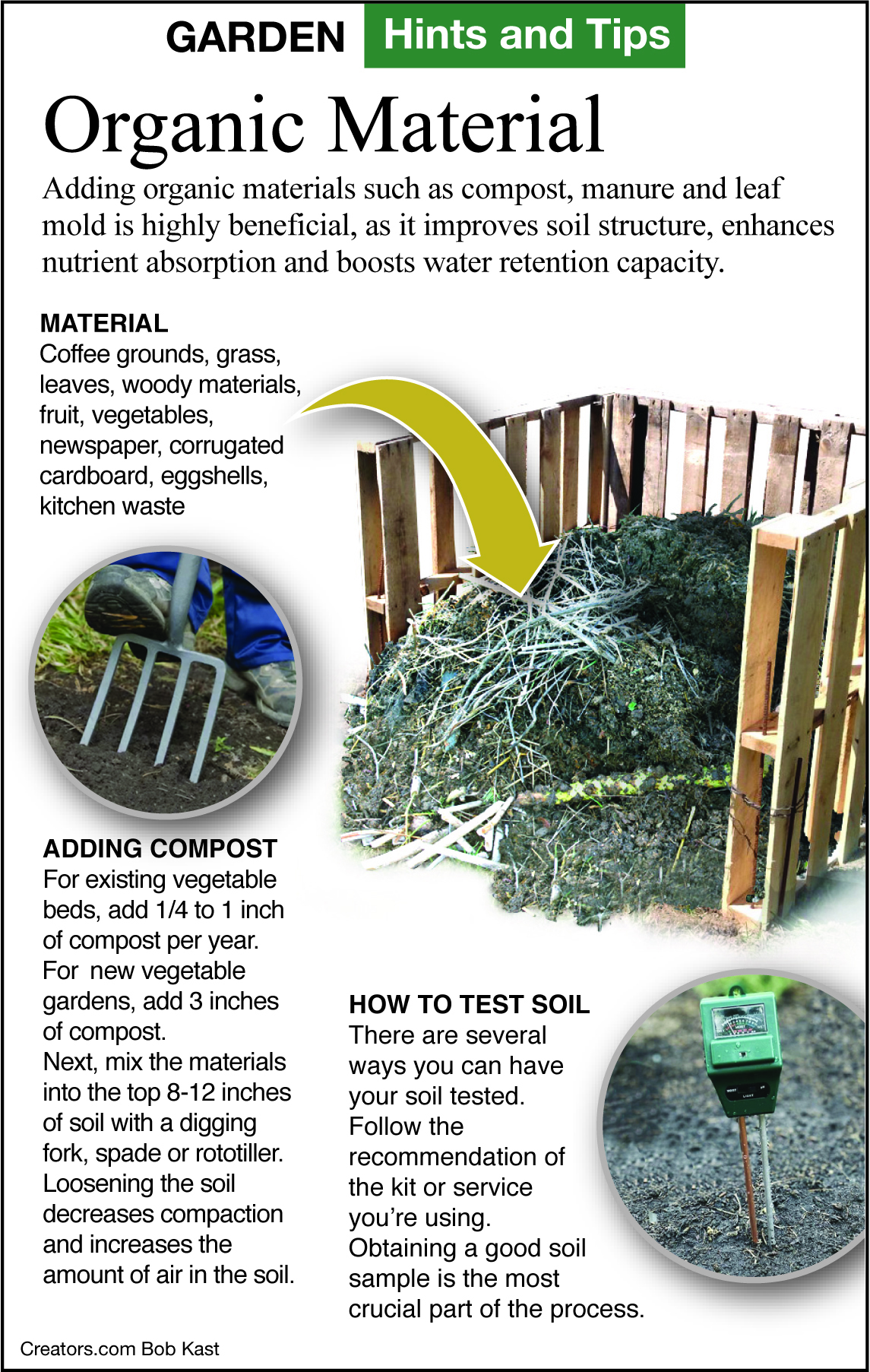
Typically, it is better to add composted materials to soil. Raw ingredients need to be broken down into chemicals by bacteria, fungi and other organisms before plants can use them. Compost is well on its way to being used by plants. Because it is decaying away, it will need to be added again in the future. So, how much do you need to add? A soil test would help determine how much, but in general, it is hard to add too much. I would try starting out by adding one-third by volume to start with.
When used in commerce in the U.S., the word organic is regulated by the USDA National Organic Program. There are rules for inputs and outputs. Inputs are things such as soil amendments and fertilizers. Outputs are foods like dairy or vegetables.
The Organic Materials Review Institute is a third-party organization that evaluates gardening products to see if they meet NOP standards. Because of the expense, some garden products that are NOP compliant are not OMRI certified. But if you need help determining what an organic gardening product is, look for the OMRI logo on the label.
One thing you need to keep in mind is that organic is not the same thing as safe. There are plenty of organic gardening products that are deadly and plenty of manmade gardening products that are safe.
(SET IMAGE) jru031826adAP.jpg (END IMAGE)
========
Email questions to Jeff Rugg at info@greenerview.com. To find out more about Jeff Rugg and read features by other Creators Syndicate writers and cartoonists, visit the Creators Syndicate website at www.creators.com.
Copyright 2026 Jeff Rugg. Distributed By Creators.






Comments