
6 reasons your dishwasher is making your glasses cloudy
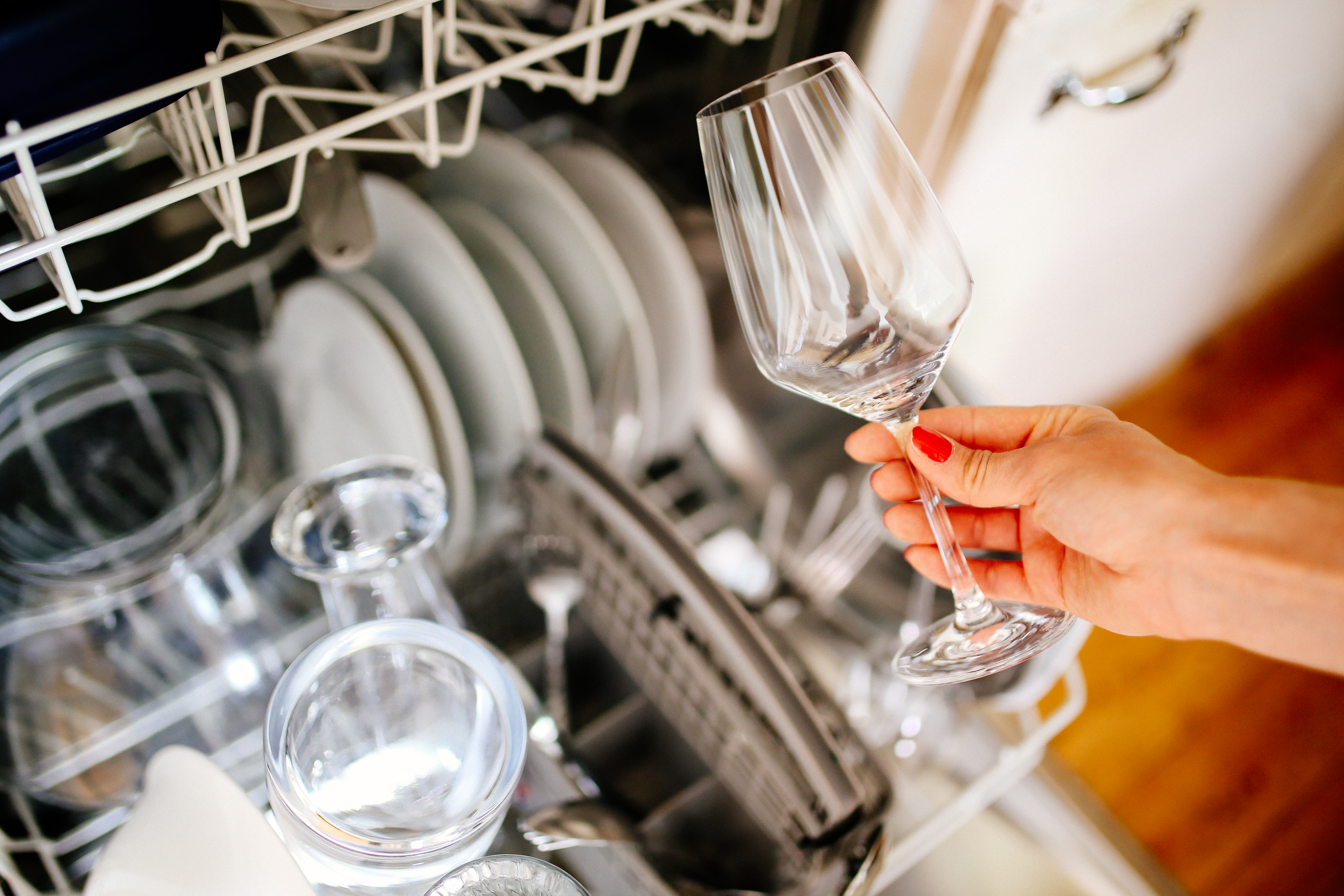
Dishwashers, especially newer ones, are pretty great. They make our lives so much easier — assuming the dishes you unload are actually spotless. This isn’t always the case, though, and sometimes we (unknowingly!) make a few mistakes that could be compromising the dishwasher’s performance.
To help us get to the bottom of what could be causing less-than-sparkly dinnerware, we turned to Morgan Eberhard, senior scientist at Cascade, and Brandon Pleshek, the cleaning expert and third-generation janitor behind the viral TikTok account, CleanThatUp.
1. A clogged or super dirty dishwasher filter
This might be hindering your machine’s performance, resulting in splotchy glasses, Pleshek says. If the filter is not cleaned monthly with hot, soapy water and a bottle brush, your dishwasher will just re-circulate any dirt, grime, and mineral deposits, potentially spraying it all back onto your dishes. In fact, you really should be cleaning the entire dishwasher interior on a monthly basis by popping a dishwasher cleaning pac into the detergent compartment and running an empty cycle to help reduce build-up.
2. You’re not positioning your glasses correctly
This is where your dishwasher loading techniques might come under scrutiny. Eberhard suggests angling cups and glasses on the top rack to prevent water from collecting after the wash cycle is complete. She also recommends stacking cups between the top rack’s tines, not over them — otherwise wet contact points could result in spots when they dry.
3. The water temperature is too low
Two things could be happening as a result of cool water. The first is that it takes much longer for water to evaporate when it’s not super hot, making it easy for soap or mineral deposits to form on dinnerware. The other thing that could be happening is that the water isn’t hot enough to fully dissolve the detergents, which could lead to speckling or gritty residues. Aim for a minimum of 120 F.
4. You’re pre-rinsing
It turns out this could actually result in dirtier-looking dishes. “When there is no food on the dishes to break down nor any hard water minerals present because of soft water, it can lead to the removal of metal ions in glassware, causing etching to occur,” Eberhard says. So skip the rinse (and save water) by scraping off as much food as possible into a trash can or compost bin, she recommends.
5. The water temperature is too high
Speckling might be caused by low temperatures, but a white cast might be due to super-high temperatures. Etching can occur when the water temperature goes over 140 degrees, so maybe refrain from hitting the sanitize cycle too often, which is at least 150 degrees. Basically, the sweet spot is between 120 degrees and 140 degrees!
6. You’re not using the right amount of detergent
According to Pleshek, too much could lead to a buildup that isn’t getting rinsed off, especially if you’re not running full loads. (You don’t need the same amount of gel for a half load of dishes as you would for a full load!) This can be fixed by hand-washing with dish soap or using vinegar to cut through the residue. But the haziness resulting from too much detergent can’t always be undone — if you have soft water and are in the habit of over-pouring, then you have the recipe for permanent etching.
(Real Simple magazine provides smart, realistic solutions to everyday challenges. Online at www.realsimple.com.)
©2026 Dotdash Meredith. All rights reserved. Used with permission. Distributed by Tribune Content Agency, LLC.

























Comments